Ever texted a meme to your group chat and watched it sink into the void? I have too — more times than I care to admit. After a few rounds of crickets, I started treating my group chat like a tiny, temperamental audience: some jokes land, others don’t, and sometimes it has nothing to do with how funny the meme actually is. There’s a surprising reason for that, and once you understand it, you can nudge the whole convo back to life with a well-timed GIF. Here’s what I learned after messing up, learning from friends, and doing a lot of meme-scientist-level experimentation.
The real reason memes get ignored
It’s not that your meme isn’t funny. It’s not that your friends are monsters. The biggest reason a meme gets ignored is context — and by context I mean a few overlapping social signals:
- Timing: If someone’s in the middle of venting, sharing an important update, or the group is in a “serious mode,” dropping a meme feels tone-deaf.
- Thread fatigue: Long threads create invisible walls. People tune out because they don’t want to scroll back to figure out where a jump-in fits.
- Ownership: If a meme comes from an outsider (someone who rarely posts), the group might be less likely to engage — social groups have posting hierarchies.
- Signal noise: If the chat already has multiple active conversations, your meme gets buried and never gets a second look.
- Mood mismatch: Not everyone shares the same humor baseline. Even among close friends, the threshold for engaging with a meme can vary by mood or energy level.
Once I started paying attention to those cues, my meme hit rate improved dramatically. But here’s the shortcut: when you do miss the window, drop one of the right GIFs. GIFs are dynamite because they’re expressive without needing words — they act as social glue, a kind of “hey, I see you” that gets people reacting fast.
How GIFs repair a dead thread
A good GIF does three things in a group chat:
- Signals participation: It shows you’re engaging with the conversation even if you missed the precise tone.
- Reduces friction: Animated reactions require less cognitive effort than composing a witty reply, so people are more likely to respond.
- Resets mood: A well-timed GIF can pivot a thread from awkward to playful, or from quiet to energized.
I treat GIFs like little conversational apps: each one has a purpose. Below are seven GIFs I've used to rescue a group chat, with short notes on when to send them. Paste them, save them, or add them to your favorites on GIPHY — they’re my go-to lifelines.
7 GIFs that fix it instantly
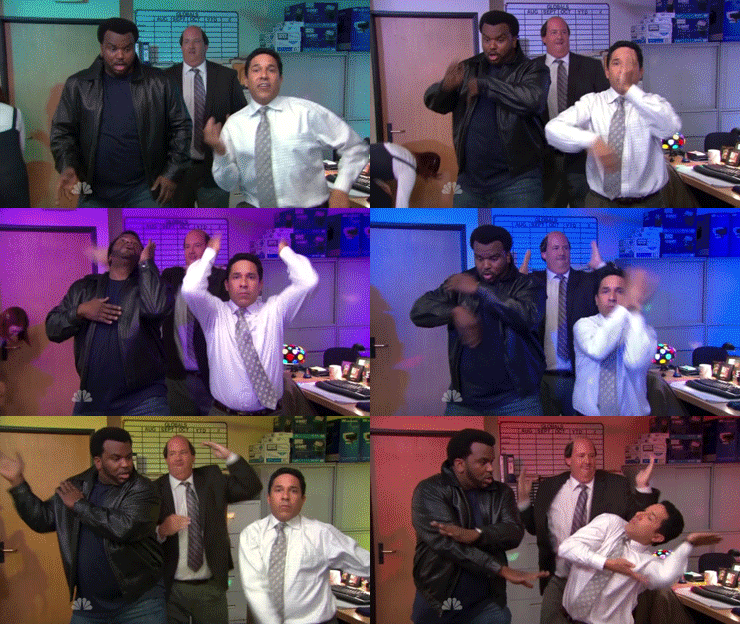 Use when you want to inject hype or celebrate something small — perfect after someone shares good news or a cute photo.
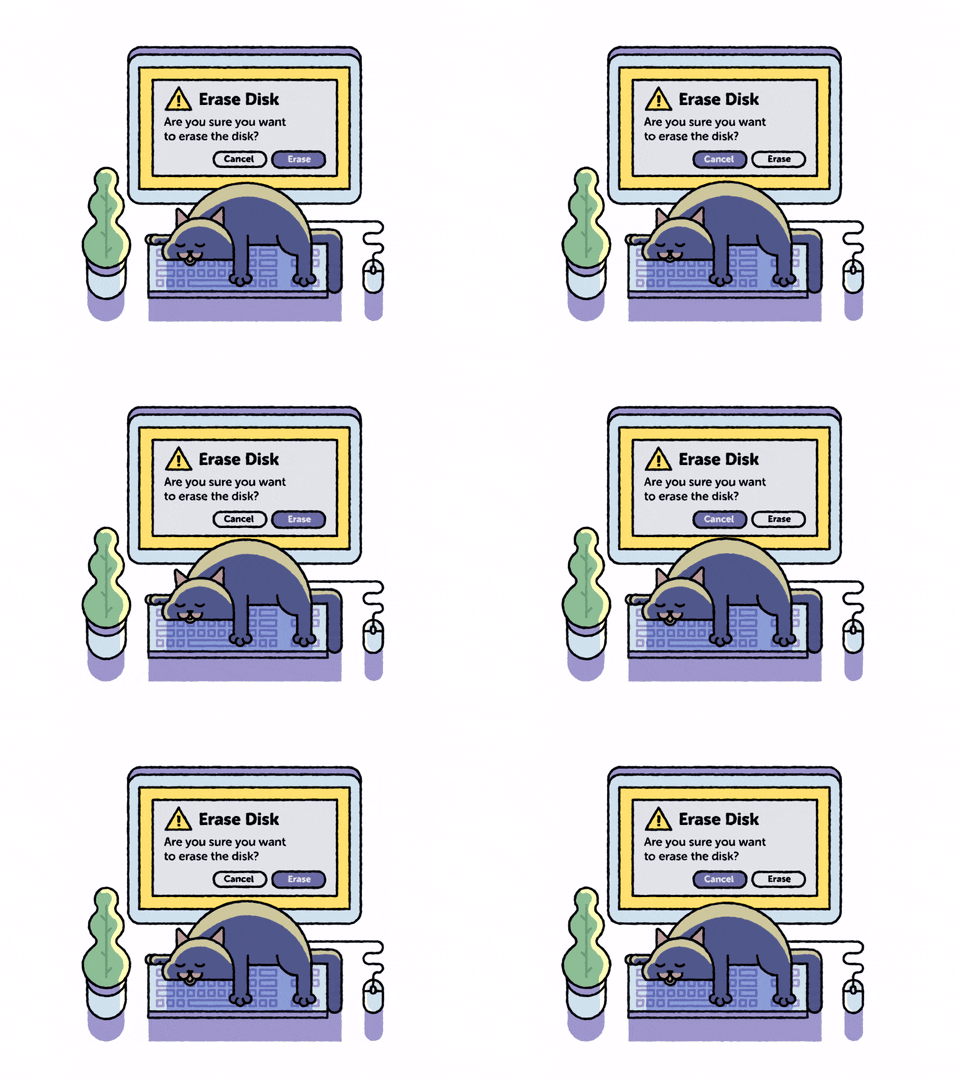 Use when the chat has gone awkward, someone typoed something embarrassing, or a plan fell through. It acknowledges the moment without adding pressure.
 When you want to communicate enthusiastic agreement — a quick “same” without typing a novel.
 Perfect for sarcastic applause or when someone flexes a tiny win — it elevates the mood and invites replies.
 For when you actually find something hilarious and want to make sure the group knows you laughed. Laughter is contagious; send this and others usually follow.
 When someone posts an eyebrow-raising take or a humblebrag — it’s playful judgment that keeps the vibe light.
 Use to defuse tension. If a conversation is getting heated or someone is upset, this kind of low-key, soothing GIF helps cool things down.
How I pick the right GIF fast
Over time I developed a mental checklist for GIF deployment. It helps me decide which to use without overthinking:
- Read the room: Quick scan: is the vibe serious, celebratory, or chaotic?
- Choose the intent: Do I want to cheer, defuse, agree, or roast? Pick a GIF that matches that intention.
- Keep it short: A single GIF beats multiple messages. One well-chosen clip communicates more than a paragraph.
- Be brand-aware: Some GIFs reference shows or celebrities (think Friends or The Office). If the group loves that source, it lands harder.
- Don’t weaponize it: Avoid GIFs that shut people down aggressively — aim to reconnect, not to embarrass.
When to avoid GIFs
GIFs are magic, but they’re not universal. Don’t send them if the message is genuinely serious — news about health, money, or stuff that needs sensitivity deserves actual words. Also be mindful of data limits for people on capped plans; looping GIFs can chew through bandwidth. In those cases, a short text or emoji can be friendlier.
Practical tricks that actually work
- Save favorites: Make a “go-to” folder in your GIF keyboard (GIPHY and Tenor let you favorite). When a thread goes silent, you can react in seconds.
- Layer with a one-liner: Sometimes a GIF + two words is perfect: “Same!” or “Mood.” It feels engaged but not performative.
- Use GIFs to tag people: If you want someone specific to notice, send a GIF and @-mention them — playful and effective.
- Rotate to avoid fatigue: If you spam the same GIF, it loses power. Keep a small rotation of 10–15 favorites.
So next time your meme fades into the void, don’t panic. Read the room, pick a purpose, and throw in a GIF that nudges the group back toward fun. It’s the fastest, least awkward method I know for turning silence into a volley of reactions — and honestly, it makes scrolling through my phone infinitely more entertaining.