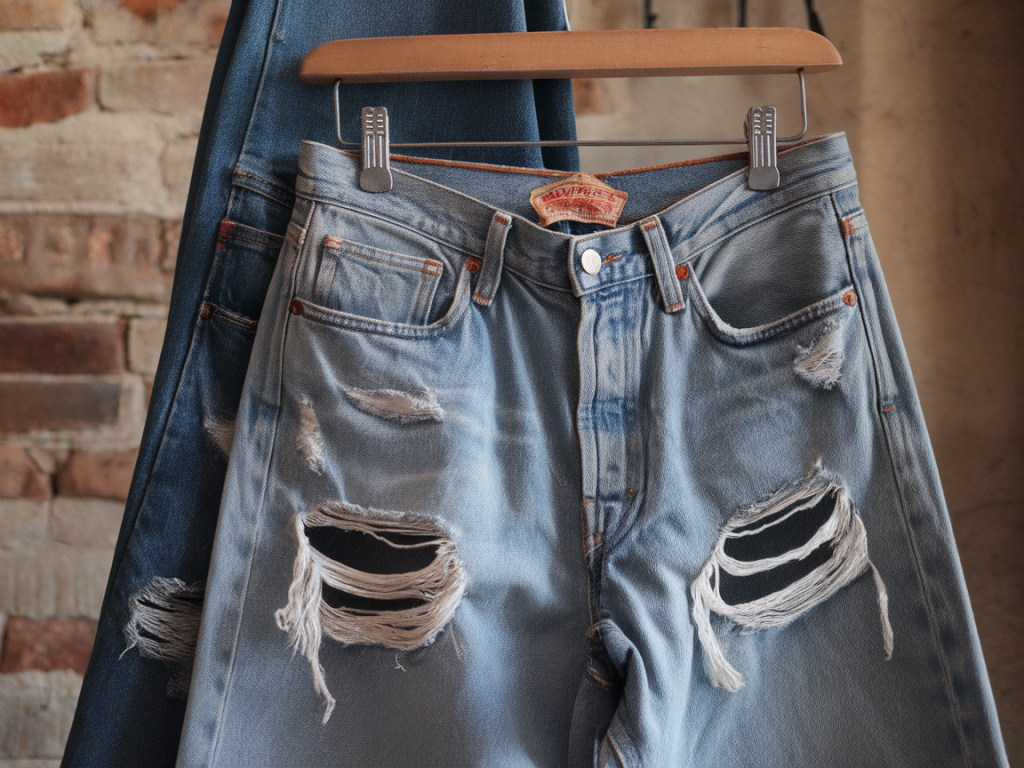
I keep finding vintage Levi’s scattered across my feed, in celeb snaps, in the background of indie films, and stuffed into the wardrobes of every friend who swears they “only shop secondhand now.” It’s not just nostalgia — there’s a real fashion and cultural momentum behind the comeback. I started digging into why these denim relics have moved from thrift-store curiosities to wardrobe essentials, and where you can actually score the authentic pieces without getting fleeced. Here’s what I’ve learned while knee-deep in denim and scrolling through far too many listings on Depop.
Why vintage Levi’s are suddenly everywhere
There are a few overlapping reasons this particular relic of Americana is having a moment:
Quality and authenticity: A lot of modern denim skews toward fast-fashion construction. Vintage Levi’s — especially 501s from the 1960s–80s — were made to last. The denim is heavier, the stitching is robust, and the hardware (rivet placement, buttons, arcuate stitching) was built to take punishment. That patina of wear? That’s considered a badge of character now, not a defect.Sustainability and secondhand culture: Shopping used is cool again — but this time with purpose. Instead of chasing trend cycles, people are investing in one great pair that will last years. Vintage Levi’s fit that ethos perfectly: durable, repairable, and already “broken in” in a way new jeans can only simulate.90s/Y2K revival: Fashion works in cycles, and we’ve circled back to the relaxed, straight-leg, high-waist silhouettes that Levi’s helped define. Influencers and stylists are pairing vintage Levi’s with everything from ballet flats to chunky trainers, making them feel modern.Iconic fades and individuality: No two pairs fade the same. Those whiskers, honeycombs and knee fades tell a story — they’re personal. You can buy a pair of brand-new jeans that mimic these effects, but you can’t buy someone else’s life experience.Celeb and archival influences: When celebs and fashion houses start referencing archival pieces or improvising on classic fits, demand spikes. Plus the market for deadstock and Levi’s reissues has made people curious about originals.How to tell if a pair is the real deal
Not every pair labelled “vintage Levi’s” is worth your money. Here are the markers I check before I click buy:
Lot number: 501, 505, 517, etc. These tell you the original cut — 501s are classic button-fly straight legs, 505s have a zip, 517s are bootcut. Know which fit you want.Red tab: The small red tab on the back pocket can say “LEVI’S” in upper-case (pre-1971 “big E” red tab) or “Levi’s” in lower-case (post-1971 “small e”). Big E pieces generally fetch more.Leather patch: Older patches are thicker and more rigid; later patches use different fonts and materials. A cracked, faded leather patch with a clear lot number is a good sign.Arcuate stitching and rivets: The double-arched back pocket stitch (arcuate) and copper rivets are classic. Look for signs of original rivets versus replacements. Rivet placement and shape changed over decades.Care/care tag and WPL number: Care tags appeared later; very early pairs lack them. You might see a WPL number (a registration number used in the US), which can help date the piece.Button fly hardware: Button stamping and finish can indicate era. For example, early 501 buttons were known for certain maker marks.If you’re unsure, ask the seller for close-ups of the waistband, back pockets, buttons, and the interior waistband stamp. Many sellers happily oblige — and a single extra photo often tells you whether the price is fair.
Quick era cheat-sheet
| Era | Key markers | Typical lots |
| Pre-1950s | No red tab, very heavy denim, early rivet styles | 501 |
| 1950s–1960s | Big E red tab, paper/stitched leather patch, sturdy hardware | 501, 501XX |
| 1970s–early 80s | Big E still present into early 70s; transitional patches and care tags appear | 501, 505 |
| Late 80s–90s | More varied washes, small e tab common, zip styles (505) popular | 505, 517 |
Where to score real deals (and how to snag them)
I’ve found the best vintage Levi’s deals aren't usually on curated vintage websites — those often mark up prices. You’re better off mixing high-skill treasure hunting (thrift shops, estate sales) with smart online sourcing. Here’s my go-to playbook:
Thrift stores and charity shops: Beat the crowds by going early in the morning or right after new donations arrive. Ask staff when they restock. In the UK, I’ve had luck at local Oxfam stores and independent charity shops. Bring a tape measure — sizes in vintage are often listed by waist-inches, not modern labels.Estate sales and car boot sales: These are literal chest-high opportunities. Sellers at estate sales often price lower because they’re clearing out quickly — and they don’t always know the value of a big E 501.Online marketplaces: Depop, eBay, Vinted (popular in Europe), and Facebook Marketplace are goldmines. Use specific filters: search “Levi’s 501 big E” or “vintage Levi’s 70s 501” and save searches with alerts. On eBay, sort by newly listed and lowest price and be ready to pounce.Local vintage shops: They curate quality but expect to pay a premium. Places like Beyond Retro, Rokit, Absolute Vintage, or Brick Lane shops in London are perfect if you want guaranteed authenticity and are okay paying for curation.Deadstock and reissues: If you want the look with modern sizing and fit, Levi’s often releases reissues and Made in USA lines. These aren’t “vintage” but they capture the aesthetic without the hassle of hunting.Haggling, pricing, and repairs
Pricing can vary wildly. In my experience:
Common 90s pairs: £20–£6070s–80s with solid fades: £60–£180Big E or rare lots: £200+Always factor in potential repair costs — a hem, a patch, or a replacement button fly can add £10–£40. I prefer to buy a pair that needs small mending rather than pay a premium for a "perfect" pair; repairs add character and extend the life of the jeans.
Alterations: Straightening, tapering, or adjusting the waist can transform a thrift find. A good tailor can bring vintage fit into your modern wardrobe without killing the silhouette.Sizing tips
Vintage sizing is inconsistent. A 30-inch waist vintage will not always equal a modern 30. Measure the jeans flat across the waistband and multiply by two — then compare to your favorite pair. Also remember shrinkage: raw denim or shrink-to-fit 501s will tighten after the first wash. If you’re in doubt, size up and tailor down.
If you want a pair but the waist is off, I’ve had great results with a denim specialist who can add side panels or take in the waist while preserving the original hardware and patch.
Finding real vintage Levi’s is equal parts luck, patience, and a little bit of obsessive checking. But once you score that perfectly faded pair? It’s like adopting a tiny piece of history that works with everything in your closet. And honestly, trying to resist thrifted denim when it’s calling your name feels nearly impossible — which is why I keep a mental list of the shops and sellers I trust, and why my wardrobe will probably always include at least one pair of vintage Levi’s.