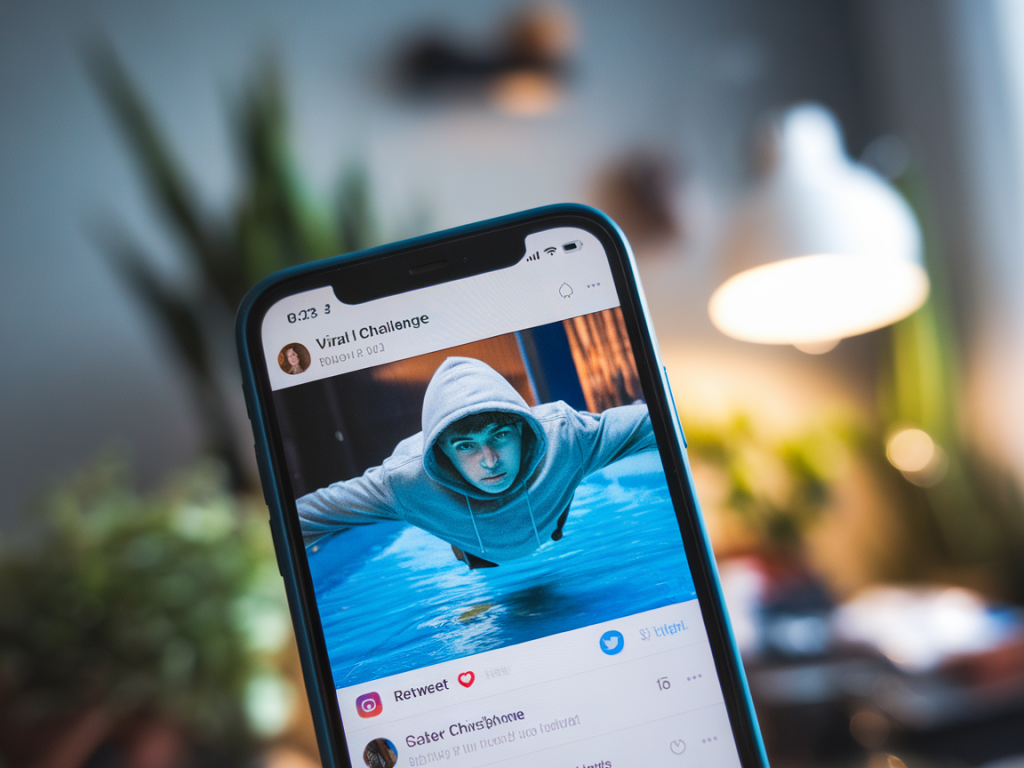
I’ll admit it: I’ve fallen down more than a few viral-challenge rabbit holes. One minute I’m scrolling for five minutes, the next I’ve watched someone floss-dance for the twentieth time and shared a ridiculous duet with my best friend. As someone who spends my days curating the internet’s bite-sized joys, I’ve become fascinated by what makes these challenges impossible to look away from — and impossible not to share. Here’s what I’ve noticed, backed by psychology and a few nerdy observations from my own feed.
Why the first swipe hooks you
There’s a reason TikTok’s “For You” page feels like a perfectly-tailored parade of short attention grabbers. At the core is variable reward — a concept straight from behavioral science. When an app shows you content that could be great but isn’t guaranteed, your brain releases a little dopamine every time something lands just right. It’s the same mechanism that keeps people hitting “next episode” on Netflix.
I see this in action with viral challenges: the first clip in a loop often teases a reveal, a fail, or an unexpectedly clever twist. That uncertainty + quick payoff = scroll-stopping magic. The format of most challenges (short, repeatable, punchline-driven) is engineered — intentionally or accidentally — to trigger that loop.
Five psychological hooks that make challenges contagious
- Social proof: When thousands of people try the same stunt, it signals “worth watching.” Seeing many others participate convinces us something valuable is happening. I’ll try things I would otherwise skip simply because I’ve seen a parade of friends and creators do it.
- Identity signaling: Challenges let you show who you are without saying much. Whether it’s a dance move, a makeup transition, or a meme format, participating broadcasts group membership — “I get this”; “I’m trendy”; “I find this funny.”
- Ego and achievement: Completing a tricky dance or nailing a flawless transition gives a mini boost. People post to feel competent and to collect likes that validate that feeling.
- Humor and surprise: Jokes land quickly in short clips. A setup and a punchline within 15 seconds is a guaranteed shareable unit. I personally reshare anything that makes me laugh loud enough to interrupt my coffee routine.
- Low barrier to entry: Most challenges are easy to replicate. No special equipment, no training — just a phone and a willingness to look silly. That accessibility encourages participation and remixing.
Why sharing feels like the right thing to do
There’s a ritual to sharing challenges that I think about a lot. When I send a video to a friend, I’m communicating: “Look at this; I thought of you.” That tiny act strengthens bonds through shared humor and cultural shorthand. Psychologists call this social capital — you gain likeability and relevance when you pass along something fun.
Also, sharing acts as a form of curation. On platforms like Instagram and Twitter, posting a trending challenge is a low-effort way to stay visible and show you’re in the loop. Creators and casual users both benefit: creators get reach and engagement, while casual users get the social payoff of being “current.”
The role of algorithms (and why they sometimes feel too smart)
Algorithms don’t just recommend content — they amplify patterns. If a challenge ticks certain boxes (high early engagement, re-watchability, lots of comments), platforms push it to more people. This algorithmic boost doesn’t care whether a challenge is wholesome, absurd, or annoying; if it hooks viewers, it spreads.
I’ve noticed apps like TikTok and Instagram favor formats that keep viewers on the app longer: short loops, surprising edits, and duet or stitch mechanisms that invite participation. That’s why so many challenges come with built-in templates — creators figure out what the algorithm likes, and then create a reproducible format for others to copy.
Why some challenges stick — and others fade
Not all viral moments are equal. Some challenges have staying power because they tap into deeper cultural currents or allow wide reinterpretation. Others flame out fast because they’re too niche or they rely on a novelty that gets old once the punchline is exhausted.
From my feed, the ones that last tend to have at least one of these qualities:
- Adaptability: people can remix or personalize them easily (e.g., dance challenges where everyone adds their twist).
- Emotional resonance: they evoke nostalgia, joy, empathy, or collective catharsis.
- Utility: they teach something small or showcase a satisfying skill (think quick recipes or beauty transformations).
When viral challenges go wrong (and how to spot the red flags)
Not every trend is harmless. Some challenges escalate into risky territory — physically dangerous stunts, pranks that humiliate others, or dumb hacks that can cause harm. The moment a challenge encourages people to put themselves or others at risk, the viral loop becomes dangerous.
Here’s my quick checklist for whether a trend is worth participating in:
- Safety: Could this hurt me or someone else? If yes, skip it.
- Consent: Are other people involved? Did they agree to be filmed?
- Respect: Is it punching down at marginalized people or trivializing trauma?
- Longevity: Will this post haunt me in five years?
Practical tips for creators who want to ride the wave — responsibly
If you want to participate in or create a challenge, here’s what I do to keep my content fun and shareable without crossing lines:
- Start with a clear format. The easiest challenges to copy are the ones with an obvious structure.
- Make replication simple. Use accessible music (check licensing), a recognizable prompt, and short clips.
- Encourage creativity. Ask followers to add their twist rather than copying exactly.
- Set boundaries. If a version of the challenge goes risky, call it out and steer people toward safer alternatives.
- Credit original creators. It’s good manners and keeps the community healthy.
A personal rule: prioritize delight over desperation
I’ll share something that genuinely delights me — a clever edit, a heartwarming reveal, or a dance that makes my shoulders relax. I try to avoid participating in trends just for the algorithmic boost; when content feels desperate, audiences can sense it. The best challenges create a small, shared thrill. They make you smile, tap the screen, and maybe send the clip to a friend who will laugh in the exact right place.
Keep scrolling, keep sharing, and — most importantly — keep asking whether a trend is serving joy or just serving noise. I’ll be here, curating the moments that make you snort-laugh into your coffee and the ones that are absolutely not worth trying (you’ll know them when you see them).