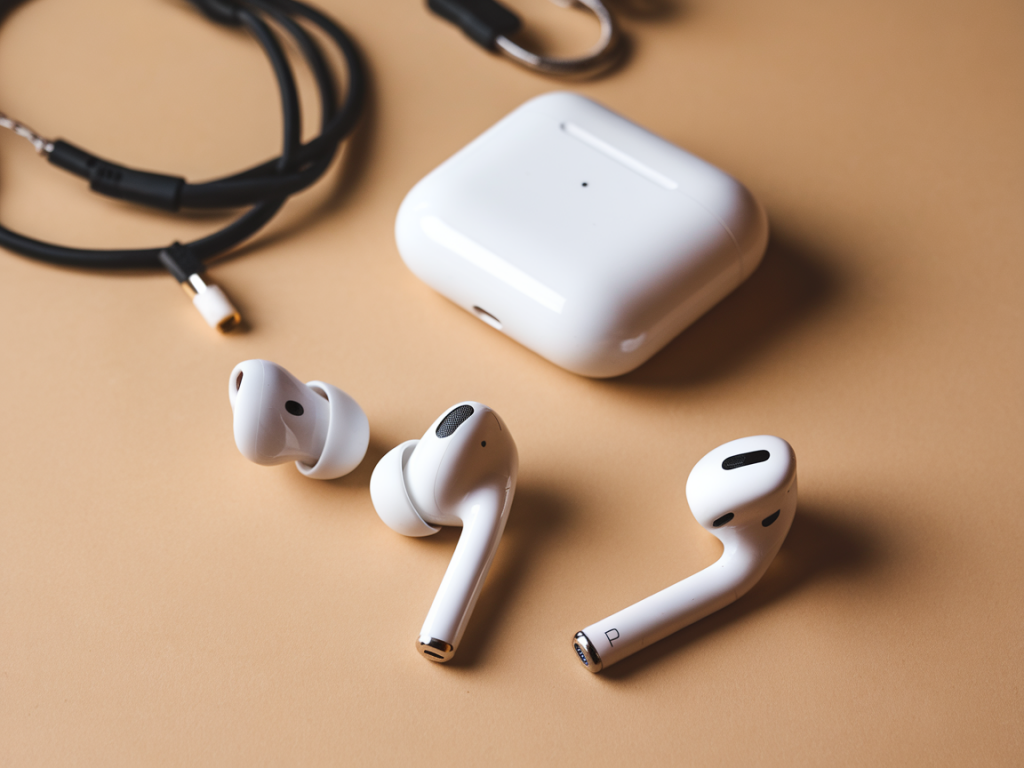
I spent an entire month swapping my trusty Apple AirPods for a rotation of cheap wireless buds that cost a fraction of the price. Why? Part curiosity, part budget experiment, part shameless hunt for viral value: could tiny, bargain earbuds actually get me through commute playlists, phone calls, and a handful of TikTok marathons without making me miss my AirPods?
What did I test and why
I tried four different budget pairs over the month — each under £30 — including generic Amazon best-sellers, a pair from Anker’s lower-priced Soundcore line, some flashy fashion-brand “wireless” buds, and an ultra-cheap set from a supermarket tech label. I alternated them week-by-week so I could compare real-life wear over time instead of just a one-off impression.
People always ask what “cheap” means here. For me it’s anything well below premium true wireless pricing: no active noise-canceling chips, likely micro-USB or entry-level USB-C charging cases, and marketing that leans toward style and value rather than specs. I wanted to know whether the trade-offs were annoying or merely noticeable.
First impressions: unboxing, fit, and build
The unboxing set the tone. AirPods have that clean, confident packaging. The budget buds? A mix. One came in a padded envelope with loose foam; another felt like it was trying too hard with neon stickers and an instruction manual in seven languages.
Fit was the biggest immediate variable. The AirPods Pro and AirPods (non-Pro) are designed to _feel_ like a part of your ear — lightweight and secure. Two of the cheap pairs were comfortable enough for 30–60 minutes, but by the second hour I was fiddling and readjusting. Only one budget model had multiple ear-tip sizes that actually made a difference for passive isolation.
- Comfort: 1 pair matched AirPods for short wear; others were slightly irritating after long sessions.
- Build: Mostly plastic, light, potentially fragile — expect scuffs sooner than with AirPods.
- Case: Clamshells felt cheaper; magnets weak on some models, which made pocket life risky.
Sound: is “good enough” actually good enough?
This is the money moment. People ask me: “Do cheap buds sound awful?” The short answer: not always. The long answer: they sound fine for podcasts, talk radio, and casual background music — and inconsistent for bass-heavy tracks or complex production.
I listened to a range of things: Billie Eilish (for bass texture), Phoebe Bridgers (vocals and nuance), hip-hop (for thump), and spoken-word podcasts. On the budget sets:
- Vocals were clear on most — podcast hosts came through well.
- Bass was often boosted or muddy depending on the model; you lose the AirPods’ balanced tuning.
- Soundstage was narrower; songs that felt “airy” on AirPods sounded flatter.
For daily commute playlists and background noise, I found myself just fine. If you’re an audio snob or do detailed listening, cheap buds will feel limiting.
Calls and microphones
One of my biggest worries was call quality. I take a lot of interview-style calls and voice notes. On this front, AirPods still win: mics are optimized, and background noise filtering is decent.
The budget buds ranged from “utterly adequate” to “cringe.” On windy days, most cheap mics picked up wind and street noise much more aggressively. One pair had an unexpectedly good mic for voice notes — crisp and clear — but it sounded like the outlier rather than the rule.
Battery life and charging
Budget buds often advertise 4–8 hours on a single charge. Real-life? I got close to the lower end. The case top-ups were inconsistent: some gave me two decent recharges, others died quickly. None matched the reliability of my AirPods case, which feels like a perfectly tuned combo of battery and pairing efficiency.
- Daily use: If you listen a few hours a day and remember to charge overnight, cheap buds can last a full day.
- Long trips: I wouldn’t rely on them for back-to-back travel days without a portable charger.
- Charging ports: Some still used micro-USB — annoying if you’ve standardized on USB-C.
Connectivity, latency, and gaming
Bluetooth pairing is mostly painless: every pair connected to my phone and laptop without drama. But latency is a different story. For casual scrolling and video, it’s okay. For gaming or anything requiring lip sync, you’ll notice a lag. AirPods’ low-latency H1/W1 chips are still superior; cheap buds use generic Bluetooth stacks and sometimes stutter on video after prolonged use.
Features you’ll miss
Switching from AirPods, you lose a few convenience features that I actually missed:
- Instant pairing and device switching: AirPods’ seamless handoff between iPhone, Mac, and iPad is a real quality-of-life upgrade.
- Spatial audio: For immersive tracks or Apple TV content, spatial audio does add something — it’s missing on budget alternatives.
- Effective active noise cancellation: True ANC isn’t in the budget price bracket, so background noise is more prominent.
Durability and long-term usability
After four weeks of daily use, some cheap buds showed signs of wear: scuffs, a slightly squeaky hinge on one case, and a faded button. I won’t say they’re fragile, but if you’re rough with tech, cheap buds are more likely to need replacing sooner than a well-cared-for pair of AirPods.
My day-to-day verdict (no grand finale, just practical notes)
Here’s what I actually found myself doing:
- I used budget buds for grocery runs, working at cafés, and quick commutes — they were perfectly fine.
- I switched back to AirPods for work calls, long flights, and when I wanted fuss-free device switching.
- I kept one cheap pair in my bag as a “panic” set — gym, sweaty runs, or times I wouldn’t risk my AirPods.
People often ask whether switching is worth it for cost savings. If you mainly listen to spoken-word content and want a throwaway pair you won’t cry about if lost or damaged, cheap wireless buds are a terrific bargain. If you rely on premium audio quality, mic fidelity for calls, or seamless integration with the Apple ecosystem, AirPods still justify their price tag — especially if you value the small conveniences that add up in daily use.
Practical tips if you try the swap
- Look for multiple ear-tip sizes — it vastly improves comfort and passive noise isolation.
- Check the charging port. USB-C is preferable — replace a micro-USB model only if the price is truly irresistible.
- Read mic reviews specifically if you take a lot of calls; many reviewers focus only on sound quality, not voice pickup.
- Buy a cheap protective case if the included one feels flimsy — it extends lifespan.
- Test them with videos before committing: latency is subtle but real.
This month-long swap didn’t make me renounce AirPods, but it reminded me that perfect is not always necessary. Cheap wireless buds can be liberating: they let you be careless, experimental, and a little reckless in ways I wouldn’t with expensive earbuds. And between you and me, there’s something happily rebellious about enjoying a five-pound set of buds that somehow gets you through a morning commute with a smile.